
Biomechanical Environments Laboratory Testing Services
Customized biomechanical testing equipment and services
Our lab specializes in designing experimental fixtures and protocols for biomechanical tests for which there is no standard method in practice. This includes adapting existing equipment for novel measurements often focusing on recreating the biomechanical environments of the living specimen. A standardized quoting/billing service agreement is in place with Texas A&M University to facilitate service offerings to university and external groups. Please reach out via the “contact us” page for inquiries. Some project type examples are shown below.
Cell/Culture Work
Uniaxial bioreactor developed by BMEL – Allows cultured cells to undergo controlled uniaxial tension cycles to study the response.
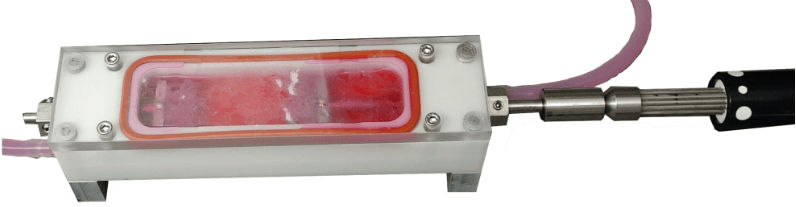
A bioreactor developed in the Biomechanical Environments Laboratories for applying simultaneous flow and stretch to cultured cells, allowing microscopy and fluoroscopy of cells in vitro
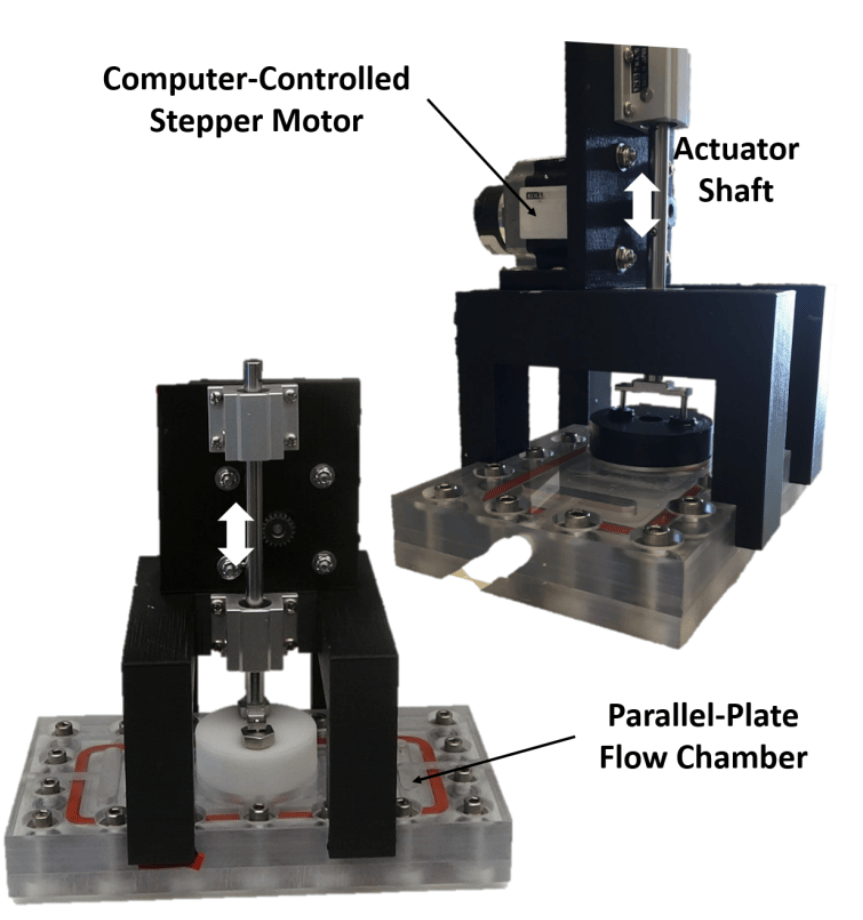
A novel biaxial system developed by the Biomechanical Environments Laboratories (BMEL) is capable of performing and isolating three modes of deformation on a membrane (dilation, squeeze, and shear), along with capturing overhead images for Digital Image Correlation for subsequent analysis. Instrumented with LVDTs and an array of load cell sizes for analyzing a wide range of sample types. Designs have also been planned to allow submerged samples in a heated, circulated bath of user-defined media.

Various studies on previous sample types have resulted in custom designs to overcome challenges posed by working with biological tissues/samples.

New measurement and analysis methods have been developed to more appropriately characterize biological tissues with meaningful and more importantly practically useful parameters

“Classic” Load Frame Services
Test Resources® Axial/Torsion System
Our lab houses a commercial axial/torsion load frame with 2000 lb axial compression/tension and 28.3 Nm torsion capacity.
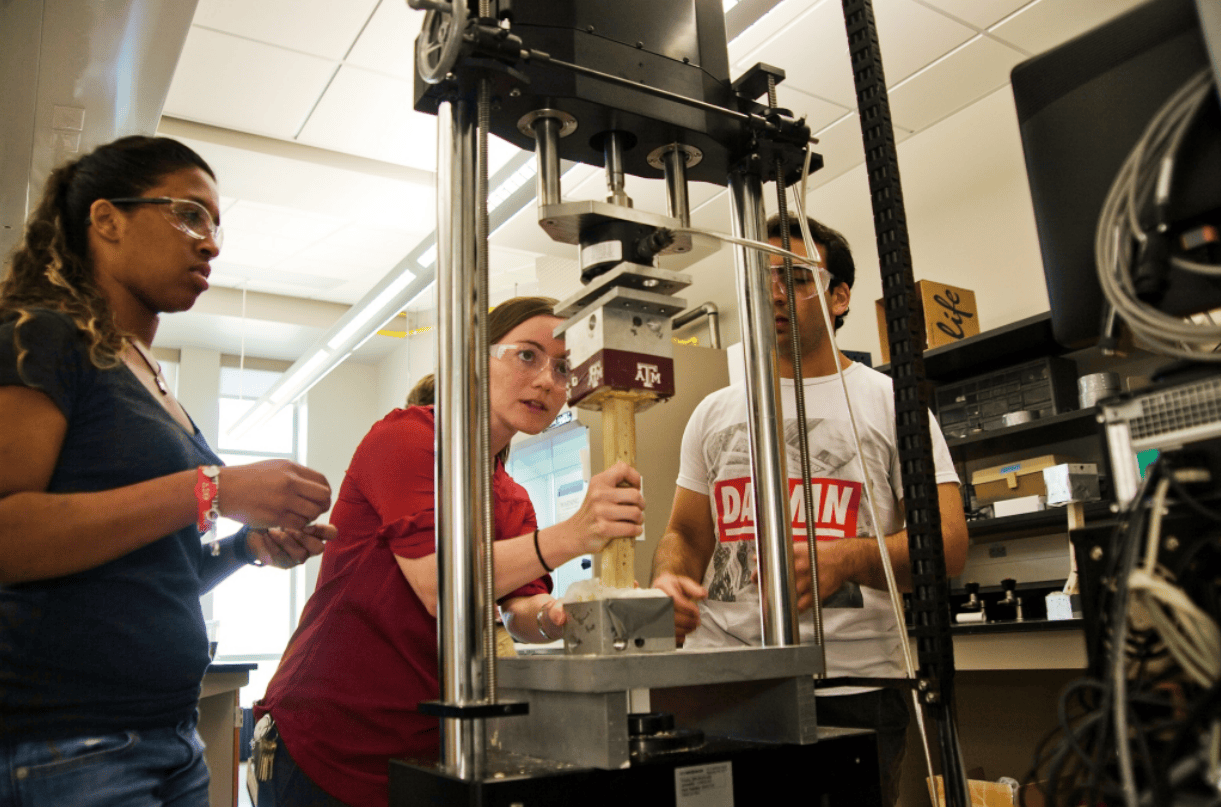
With many years of testing on a wide array
of sample types/geometries, our lab is
experienced in adapting these traditional
load frames for the non-tradiational
techniques required to analyze biological
samples.
Canine Femoral Gap Fixation Paper

Four-point bending fixture for study listed above

RTS (Reconfigurable Testing System) Load Frame
Our lab houses a custom-built load frame hosted allowing infinitely reconfigurable setup options combining axial compression/tension and torsion experiments in a plexiglass enclosure. The system is hosted in a BSL 2 lab allowing measurements on sample types otherwise not permissible, such as human tissues.
The system currently employs a 15” displacement LVDT, a 2000 lb load cell and actuator, and a 28.3 Nm torsion drive.

Torsional actuation configuration with 1) the
loading member added to the linear
bearings, 2) Torsional load cell and
associated fixtures, 3) Torsional actuator
with associated mounting fixtures


Motion Capture Services
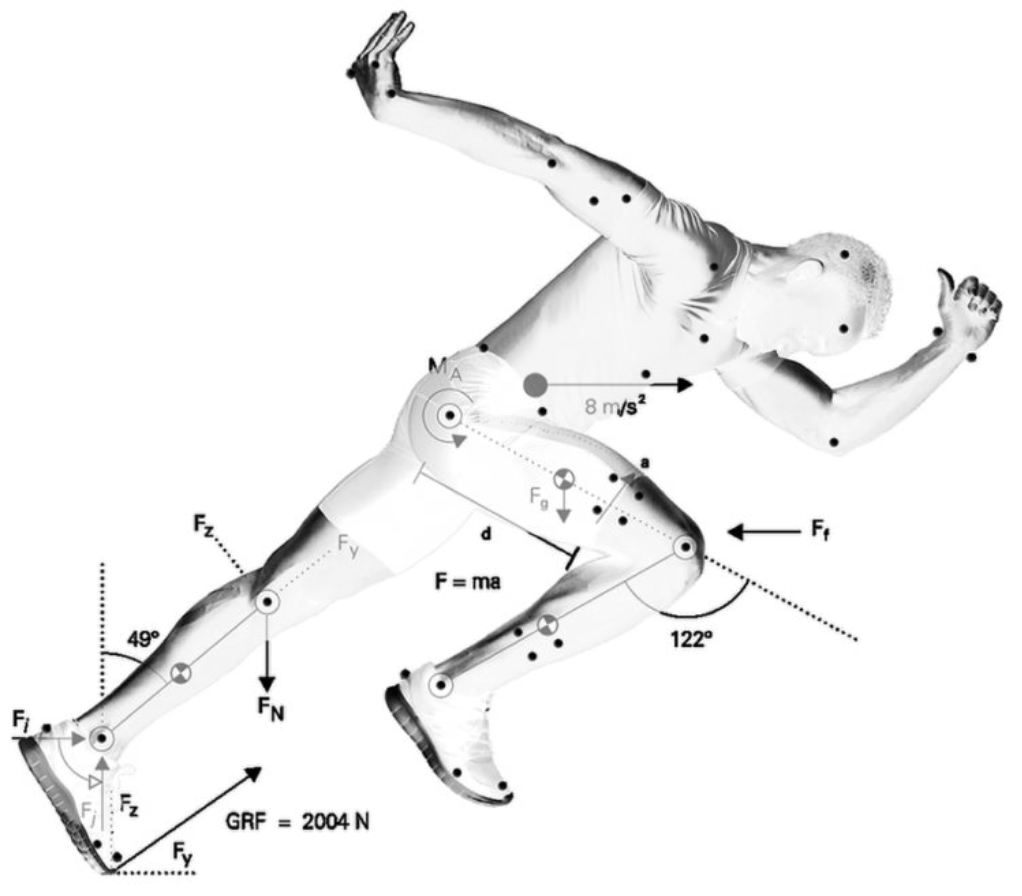
Our lab has a Vicon® motion capture system utilizing tripod mounting cameras that allows it to be mobile, and has even been set up in outdoor settings, such as was done in the sheep study linked below. The system has 12 IR cameras for tracking as well as 3 video cameras for synched capture of the visual environment. It also incorporates 4 AMTI® force plates with 6 degrees of freedom to measure all contact reaction forces in vector form.

Equipment set up during a football motion capture (2016). Right) View of a puppy affected with Golden Retriever Muscular Dystrophy in the motion capture system using Nexus software (2017)


Example outdoor installation in an open-style barn for the sheep study linked above.
